
Microneedling
What Is Microneedling?
Microneedling, also known as collagen induction therapy, is a minimally invasive treatment that uses very fine, sterile needles to create controlled micro-channels in the skin. These tiny “micro-injuries” stimulate your body’s natural wound-healing response, triggering the production of new collagen and elastin—the proteins that keep skin firm, smooth, and youthful.
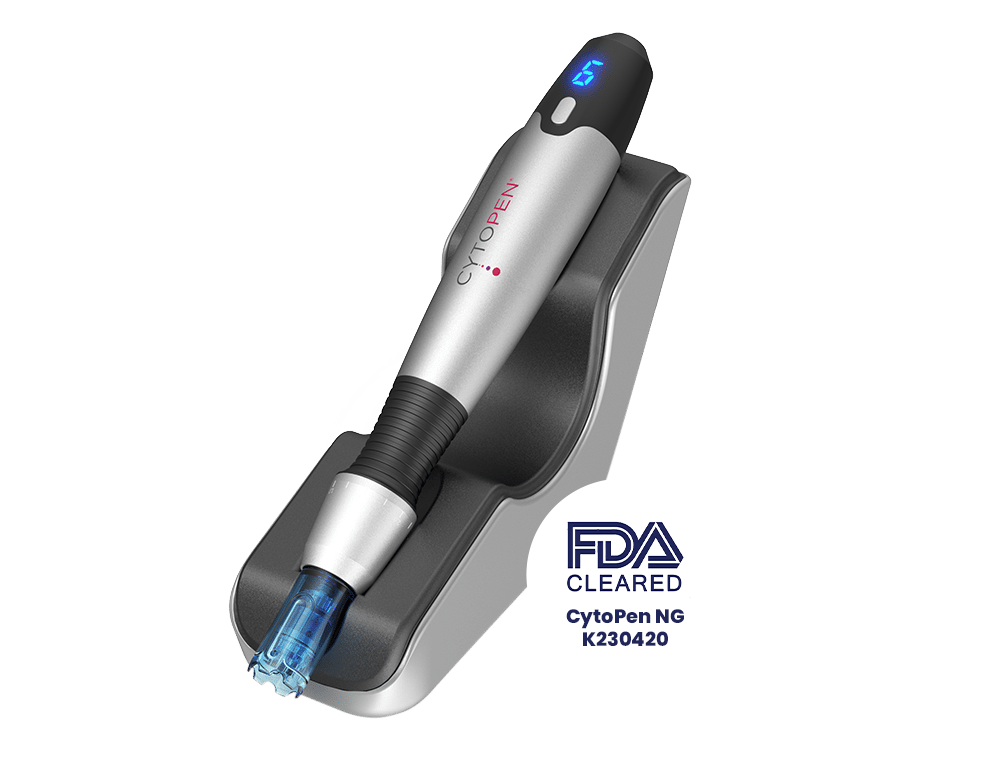
Cytopen by Emage
This FDA‑cleared professional microneedling and microderm device combines electric and battery‑powered freedom with precision engineering, offering dual scalloped tips (36‑needle and 12‑needle), an anodized aluminum shell, and a German motor with three speed settings. With 2 mm depth control, a Nano tip option for microdermabrasion, and a secure screw‑in cartridge mechanism, the CytoPen® S2 delivers dramatic collagen‑boosting results with little to no downtime or discomfort.
4 Reason Why People Choose Microneedling
01
Improve Acne Scars and Skin Texture
Microneedling helps soften the look of acne scars, textural irregularities, and enlarged pores by stimulating collagen remodeling in the deeper layers of the skin.
02
Soften Fine Lines and Early Signs of Aging
By encouraging fresh collagen and elastin, microneedling can smooth fine lines and support firmer, more resilient skin—especially on the face, neck, and décolleté.
03
Brighten Dull, Uneven Skin Tone
Microneedling can help reduce the appearance of mild hyperpigmentation and sun damage, resulting in a more even, luminous complexion over time.
04
Achieve Results with Minimal Downtime
Many people choose microneedling because it offers visible improvement with relatively short recovery compared to more aggressive resurfacing procedures.
How Microneedling Treatments Work in Practice
Before treatment, a topical anesthetic is applied to keep you comfortable. Once the skin is numb, a professional microneedling device with very fine, sterile needles is passed across the treatment area in a controlled, even pattern.
In-office devices allow your provider to adjust needle depth, typically ranging from about 0.5 mm to 2.5 mm, depending on the area and concern being treated (for example, shallower depths for glow and texture; deeper for scars and more advanced lines).
A typical appointment:
- Takes around 30–45 minutes, depending on the size of the area
- Leaves the skin looking mildly red, warm, or “sunburned” for 24–48 hours
- May include a soothing serum or post-care product to support healing
Most treatment plans involve a series of sessions—commonly 3–4 treatments spaced about 4 weeks apart—for best results. Clinical studies have shown that a series of microneedling sessions can significantly improve wrinkles, skin laxity, and texture over a period of several months as new collagen continues to remodel.
With proper post-care, most patients experience:
- Redness and mild swelling for 1–3 days
- Possible light flaking or dryness as the skin renews
- Gradual visible improvement in texture, tone, and firmness over the following weeks
Benefits of Microneedling
Improves Texture & Scars
Helps smooth acne scars, fine lines, and uneven texture by stimulating collagen remodeling below the surface.
Boosts Collagen & Elastin
Encourages your skin to produce more of its own structural proteins, supporting firmer, more youthful-looking skin over time.
Minimally Invasive, Little Downtime
No surgery, no harsh ablation—just tiny controlled micro-channels with typically quick recovery and manageable aftercare.
Safe for All Skin Tones
When performed correctly, microneedling is considered safe across a wide range of skin tones with low risk of pigment complications.
Versatile Treatment Areas
Can be used on the face, neck, décolleté, and certain body areas to improve scars, stretch marks, and overall skin quality.
Enhances Skincare Absorption
The micro-channels created during treatment can temporarily improve the penetration of select professional skincare products applied immediately afterward.
FAQs
Got a question? We’re here to help.
How many microneedling sessions do I need for acne scars?
Most people see noticeable improvement in acne scars after a series of 3–4 microneedling sessions spaced about 4 weeks apart. Deeper or long-standing scars may benefit from additional treatments or combination therapies. Your provider will tailor a plan based on the type and severity of your scars.
How long does it take to heal after microneedling?
Initial redness and warmth usually improve within 24–48 hours, although some patients experience pinkness, mild swelling, or light flaking for several days. Most people feel comfortable returning to normal activities within 1–3 days, following sun protection and skincare instructions.
Is microneedling safe for darker skin tones?
Yes. Traditional mechanical microneedling (without added heat or energy) is generally considered safe for all skin tones, including deeper complexions, when performed by trained professionals using appropriate settings and post-care. It is often preferred over some lasers for patients with higher Fitzpatrick skin types.
How long do microneedling results last?
Results develop gradually as collagen remodels and can last months after a completed series. Many patients maintain their results with periodic “maintenance” treatments—often once or a few times per year—along with a good skincare routine and daily SPF.
What is the difference between professional microneedling and at-home dermarollers?
Professional microneedling devices used in a medical setting can safely reach deeper layers of the skin (about 0.5–2.5 mm) with controlled depth and sterile technique, allowing for more significant collagen stimulation and better results. At-home dermarollers are typically shallower and carry a higher risk of irritation or infection if not used properly—and they don’t provide the same level of improvement as in-office treatments.
Microneedling Science & Safety
Microneedling has been the subject of multiple clinical studies and systematic reviews, which generally support its effectiveness and favorable safety profile when performed by trained professionals.
Evidence for Effectiveness
- Microneedling is widely recognized as an effective option for improving acne scars, fine lines, wrinkles, large pores, and stretch marks by stimulating collagen and elastin.
- Clinical studies show that a series of microneedling treatments spaced about 4 weeks apart can significantly improve lines, wrinkles, skin laxity, and texture, with benefits still evident months after the first session.
- Systematic reviews describe microneedling as a
safe and effective therapeutic option for scars and wrinkles, while also noting the need for continued research to standardize protocols.
Safety Profile
When performed in a professional setting using FDA-regulated devices and sterile technique, microneedling is generally well tolerated:
- Common side effects: temporary redness, mild swelling, sensitivity, and light flaking as the skin heals.
- Less common side effects: bruising, pinpoint bleeding, or post-inflammatory hyperpigmentation, usually associated with overly aggressive settings or inadequate aftercare.
Microneedling devices for aesthetic use are classified as Class II medical devices and have been legally authorized by the FDA to improve the appearance of facial acne scars, facial wrinkles, and abdominal scars in adults 22 and older, based on data supporting reasonable assurance of safety and effectiveness.
Important Distinction: Traditional vs. RF Microneedling
Traditional microneedling (the use of mechanical needles alone) is distinct from radiofrequency (RF) microneedling, which adds heat energy. The FDA has recently issued safety communications about certain RF microneedling devices due to reports of burns, scarring, fat loss, and other serious complications, underscoring the importance of receiving any microneedling procedure from qualified medical professionals who use appropriate technology and techniques.
At a reputable practice, microneedling is performed in a sterile, controlled medical environment with individualized settings tailored to your skin type and goals—prioritizing both results and safety.